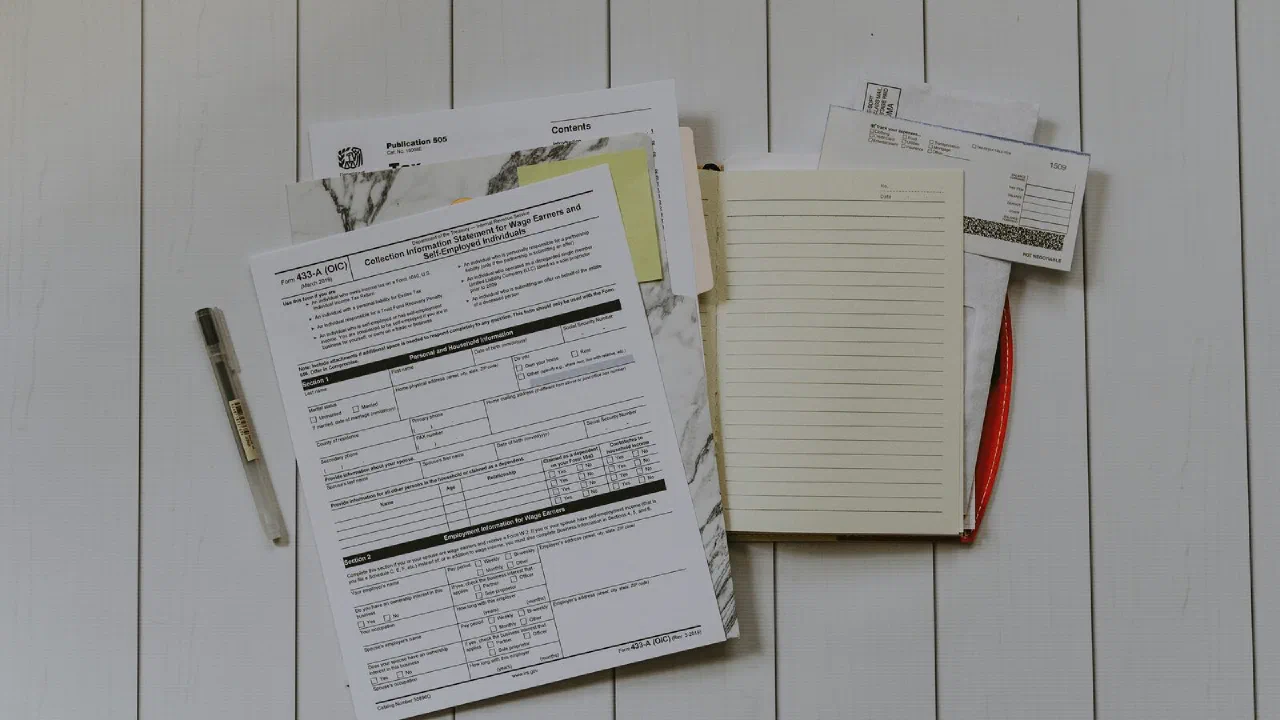
The office does not read your file the way you wrote it. It works through three gates in order — was this filed in time and by the right route, then is it free of formal defects, then does the substance hold — and it does not reach the third until the first two are passed. That order is the single most useful thing to know about the Mazowiecki Urząd Wojewódzki, because it tells you which problem is urgent and which one can wait nine months.
Almost everything written about “documents for a karta pobytu” gives you a flat list. A list does not tell you that a missing photograph and a weak accommodation document sit in completely different places in the process, or that only one of them can cost you your legal stay.
Checked on 3 September 2026. This describes what applicants are asked for and the sequence the procedure runs in; it is not advice about your case.
Where this happens
The Wydział Spraw Cudzoziemców of the Mazowiecki Urząd Wojewódzki, at ul. Marszałkowska 3/5, 00-624 Warszawa — telephone 22 695 65 65, wsc@mazowieckie.pl. The office is open Monday 10:00–18:00 and Tuesday to Friday 8:00–16:00, with client service closing half an hour to an hour earlier. Its own information portal for foreigners is at migrant.wsc.mazowieckie.pl.
You do not go there to file. Since 27 April 2026 the application is made in the MOS portal and nowhere else. You go there when you are summoned, which is a different thing and happens later.
Gate one: was it filed in time, and through MOS
The first question is not about your documents at all.
Under Article 108 of the Act on Foreigners, your stay is treated as legal from the day of filing until the decision becomes final — but only where the deadline for filing was kept and the application is free of formal defects, or the defects were corrected within the period given. That conditional is the whole of your protection, and it is why filing on the last available day is a bad idea: it leaves no room to be told something is missing.
The route matters as much as the date. UDSC states that paper applications arriving after 26 April 2026 are not examined, whatever the postmark says. A narrow set of cases still runs on paper — employer-filed intra-corporate transfer and mobility applications, family cases where the applicant is outside Poland, and family members of Polish, EU, EEA, Swiss and UK citizens — and if you are not in one of them, paper is not a route you have.
Gate two: formal defects
This is the completeness check, and it is what stands between you and the zaświadczenie.
On the document list the government business portal publishes for the single permit, checked 3 September 2026, the items an official is confirming are present:
- a digital photograph meeting the portal’s specification — the published maximum is 684 × 883 pixels, and an oversized file is a first-pass rejection rather than a judgement about you;
- copies of all used pages of the travel document;
- proof of payment of the stamp duty — 440 zł for the single permit — and of the 100 zł card fee, which go to separate accounts;
- Załącznik nr 1, completed and signed by the employer, naming the position, the working time and the remuneration;
- proof of health insurance;
- tax-office confirmation where the procedure calls for it.
Two of those are worth singling out. The employer attachment is the item you do not control, and UDSC itself names employer signatures as a source of delay. And if the fees are unpaid, the voivode summons you to pay within a short deadline rather than quietly waiting — which is a summons you must not miss.
When this gate is passed, the certificate is issued. The zaświadczenie you download from MOS — which replaced the passport stamp on 27 April 2026 — is issued only after an official has verified that the filing was timely and free of formal defects. Until then you have filed and have nothing in hand to show for it. That gap is normal and it is also the document that does less than people assume.
Gate three: the appointment
The office summons you in person to give fingerprints and a signature specimen and to present your original travel document, and to supplement the file where necessary. Digital filing changed the channel, not the contact.
Treat the summons as the highest-priority piece of post you will receive. It carries a deadline, it is the step that in practice completes the file, and the statutory clock is written around exactly this event.
Gate four: the substance
Only now does anyone assess whether you should be granted the permit. What is being tested is whether the facts you asserted hold up:
- Does the employer exist and is the arrangement real — the attachment against the company’s own record.
- Does the remuneration meet the floor. For 2026 the minimum wage is 4,806 zł gross a month, set by the Council of Ministers’ regulation of 11 September 2025 (Dz.U. 2025 poz. 1242), and the salary cannot fall below it regardless of working time or contract type. For an EU Blue Card the floor is 13,355.34 zł gross base for 2026 — see the post on the Blue Card threshold.
- Does the occupation fit the permit type you filed for.
- Insurance, and somewhere to live.
At this stage the office can and does ask for more. That discretion is real, which is why two people filing in the same week get different requests, and why no published list is ever the final word.
What this order means for you
Three practical consequences, and they are the reason to know the sequence at all.
A formal defect is an emergency; a weak substantive document is not. The first can unmake the legal stay you thought you had. The second gets you a request for more information, months from now, with time to answer it.
No certificate after a long wait is the thing to chase. If months have passed and no zaświadczenie has appeared in MOS, gate two has not been passed — and everything downstream, including the point at which the statutory clock could begin, is waiting on it. That is a specific, answerable question to put to the office, unlike “when will my case be decided”.
Silence after the appointment is ordinary. Mazowieckie was reported by the legal publisher LegalSol in 2026 at nine to fourteen months, against a statutory 60 days under Article 112a; the government’s business portal describes practice as around twelve months. Nothing about that silence is a signal about your file. The post on the Warsaw wait tells you how to tell a normal case from a broken one.
What not to do
Do not file a second application to get attention. Two open cases about the same permit is not two chances; it is a tangle the office resolves before it decides either.
Do not ring weekly. The staffing shortfall at this office has been the subject of repeated correspondence from the Commissioner for Human Rights to the ministry. Calling more often occupies the same people you need deciding cases.
Do not send anything on paper hoping it will be picked up. After 26 April 2026 it will not be.
Where this post is uncertain
The document list is the published one for the single permit and the annexes differ by permit type; the voivodeship’s own procedure pages are the authority for yours. The three-gate sequence is the shape of the procedure as the statute and UDSC’s published material describe it, not an internal workflow anyone outside the office can see. Where a figure is dated above, it is dated because it moves.